
The geek culture and pop culture are undergoing profound changes, driven less by the release of films or games than by structural shifts in regulation, monetization, and gathering places. Several recent signals are reshaping the contours of this universe, with direct consequences for gamers, collectors, and event organizers.
PEGI Classification and Monetization: Geek Gaming Facing Stricter Regulations
The significant event in the video game universe in recent months is not a title release, but a change in standards. Popular games like EA FC 27 (formerly FIFA), previously rated PEGI 3, are now rated PEGI 16 solely due to their integrated monetization mechanics. This shift is not trivial: it alters the accessibility of a significant part of the gaming catalog for minors.
Loot boxes and microtransaction systems, long considered peripheral elements, are becoming a determining criterion in age classification. For families, this means that a football game deemed harmless two years ago is now in the same age category as titles containing moderate violence.
This tightening also affects mobile games, gacha, and any pay-to-win mechanics that rely on chance. By following recent articles from Licorne Cosmique, one can gauge how rapidly this regulatory trend is accelerating and affecting entire sectors of geek culture, well beyond just console gaming.
Digital Fairness Act: European Regulation of Loot Boxes in Preparation
Beyond national classifications, a Digital Fairness Act is being discussed at the European level. This text is not limited to gambling laws. It directly targets “manipulative designs” in games and digital platforms, explicitly including loot boxes, pay-to-win, and pay-to-progress mechanics.
The chosen direction focuses on consumer and minor protection. The stated goal: to have potentially addictive elements disabled by default and not freely activated by children. The formal proposal is expected by the end of 2026.
Field feedback varies on this point: some publishers are already anticipating changes by modifying their business models, while others are waiting for the final text before making any adjustments. The concrete impact on games available in Europe remains to be measured, but the direction taken is clear. For gamers and collectors of digital goodies, this evolution could transform how content is offered and monetized.
What This Changes for Players and Publishers
If the Digital Fairness Act is enacted in its current form, several consequences are emerging:
- Games containing loot boxes or pay-to-win mechanics will have to display explicit warnings, similar to those for regulated products.
- Publishers may be required to offer versions without random monetization for accounts identified as minors.
- Business models based on free-to-play with aggressive microtransactions will need to adapt, which could redistribute the cards between independent studios and major publishers.
The available data does not yet allow for conclusions about the exact implementation timeline, but the trend towards regulating monetization mechanics is now a structuring fact for the video game industry in Europe.
Geek and Pop Culture Conventions in France: An Expanding Regional Network
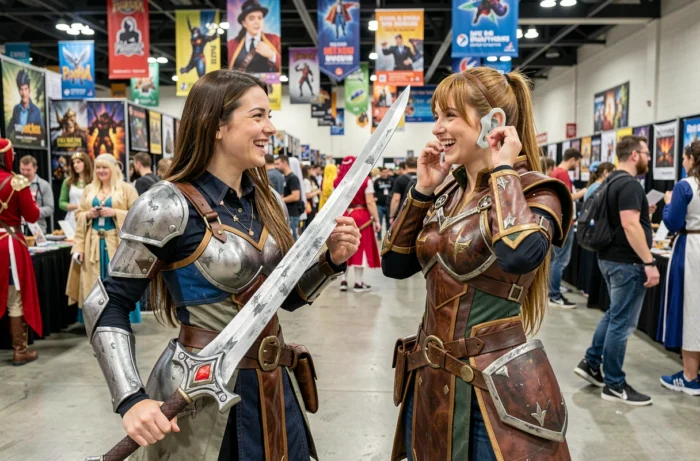
Alongside digital changes, the physical scene of geek culture is experiencing notable evolution. The network of conventions, fairs, and festivals dedicated to pop culture, manga, cosplay, and retro gaming is expanding across the French territory, including in medium-sized cities and rural areas.
Specialized agendas list events in Île-de-France, Normandy, Rhône, and many other regions. This decentralization allows local communities to access gatherings that were once concentrated in Paris or Lyon.
Modestly sized conventions attract a loyal audience around specific activities: retro gaming tournaments, markets for goodies and collectibles, signings by mangakas or independent artists, and cosplay contests. This intermediate format, between giant fairs and neighborhood meetups, seems to respond to a growing demand for proximity and friendliness.
A Busy Calendar but Logistical Challenges
The multiplication of events raises practical questions. Organizers face competition for dates, venues, and guests. Certain time slots, such as the September back-to-school period or February vacations, concentrate a plethora of offerings that can dilute attendance at each event.
On the other hand, this density benefits exhibitors and creators of merchandise, who have more showcases to present their series of figurines, limited editions, or handmade creations. For visitors passionate about video games, manga, or genre films, the choice of events has never been broader in France.
Pop Culture and Collectibles: The Boundaries Between Physical and Digital Are Blurring
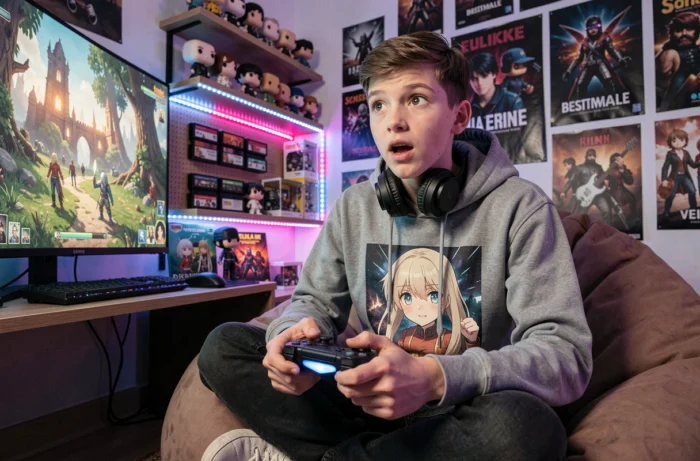
The market for goodies, figurines, and collectibles remains a pillar of the geek universe. New releases follow film, series, and game launches: each major license generates its wave of merchandise. Funko Pop!, collector’s editions of video games, and art books continue to fuel an active market, both online and in stores.
What is changing is the increasing porosity between physical products and digital content. Some manufacturers now offer connected items that unlock in-game content, or figurines associated with NFTs or digital certificates of authenticity. These initiatives remain marginal, but they signal a direction.
The question of monetization arises here as well: the business models for geek merchandise are evolving in parallel with those of gaming. Between high-priced limited editions and accessible mass-produced items, the segment is structuring around strategies of scarcity that borrow from video game codes.
The geek and pop culture universe is at the crossroads of regulatory, technological, and community transformations. The tightening of PEGI classifications, European projects for regulating loot boxes, the rise of regional conventions, and the hybridization of collectibles are shaping a reconfigured landscape. These evolutions unfold at different paces depending on the countries and segments, and their medium-term effects on fan habits remain open.